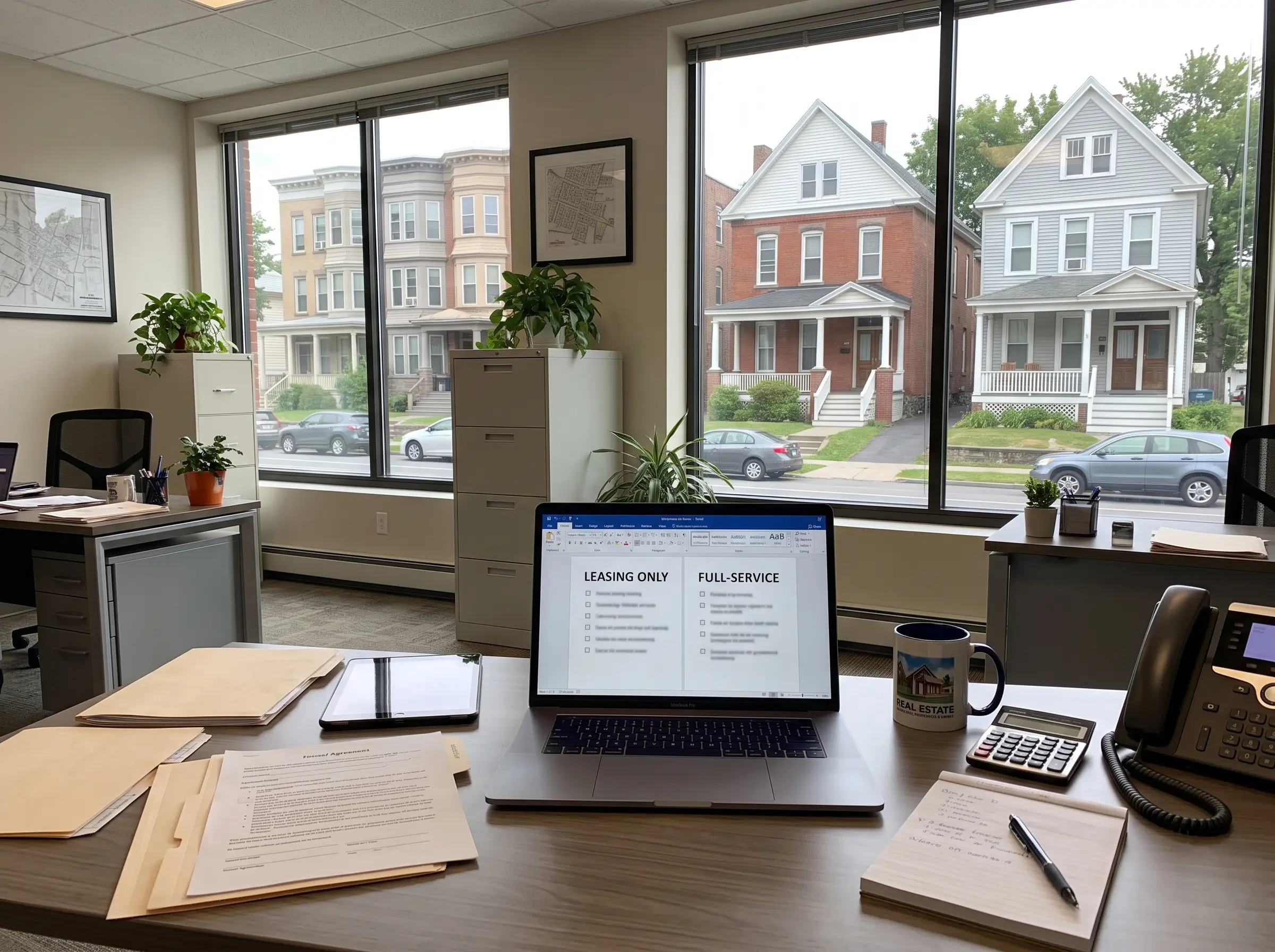
Deciding how much support you need to run your rental property is one of the most important choices a landlord will make. In the Capital Region, property owners typically choose between two main paths: leasing-only services or full-service property management. Each option comes with its own advantages, costs, and level of involvement required from the owner.
Understanding the difference between these two models is essential before signing any agreement. Choosing the wrong fit can lead to wasted money on services you do not need, or worse, being left to handle complex landlord responsibilities without the support you actually require. This blog breaks down both options so Saratoga Springs property owners can make an informed decision based on their goals, time availability, and portfolio size.
Key Takeaways
Leasing-only services are ideal for hands-on owners who want help finding tenants but prefer to manage day-to-day operations themselves.
Full-service management covers everything from tenant placement to maintenance and financial reporting, reducing the owner's daily involvement.
Owners with multiple properties or limited time typically benefit more from full-service management.
Choosing the right model depends on your budget, experience level, and how hands-on you want to be with your investment.
What Does Leasing-Only Management Include?
Leasing-only services focus specifically on filling vacancies. This typically includes marketing the property, conducting showings, screening applicants, and preparing the lease agreement. Once a tenant is placed, the owner takes over responsibilities such as rent collection, maintenance coordination, and tenant communication.
This model works well for landlords who have the time and knowledge to manage daily operations but want professional support finding qualified tenants quickly. It also tends to be more affordable upfront since owners are only paying for the leasing process rather than ongoing management. Some owners appreciate this hands-on approach because it keeps them closely involved with every decision, from setting rental rates to choosing which applicant to approve.
However, owners should be prepared to handle every issue that arises after move-in, from late rent payments to maintenance emergencies, without a dedicated team backing them up. This can become a significant burden, especially during winter months in the Capital Region when heating issues or frozen pipes require immediate attention. Owners who underestimate this responsibility often feel overwhelmed once a tenant is settled in and problems surface.
What Does Full-Service Property Management Include?
Full-service property management covers the entire lifecycle of a rental property. This includes tenant placement, rent collection, maintenance coordination, lease renewals, and handling tenant disputes. Owners who choose this option are essentially handing over the daily operations of their property to a dedicated team, freeing up their own time for other priorities.
One major advantage of full-service management is access to reliable property maintenance coordination, which ensures repair requests are handled quickly and by trusted vendors. This reduces the stress of finding contractors or juggling maintenance calls, especially for owners who do not live near their rental property or who own multiple units across the Capital Region. A dedicated maintenance network also means repairs are often completed faster and at more competitive rates than an individual owner could negotiate on their own.
Full-service management also typically includes routine property inspections, detailed move-in and move-out documentation, and support during difficult situations like evictions or lease violations. For owners who want a truly hands-off experience, this comprehensive approach removes nearly all of the day-to-day demands of owning rental property.
Comparing Costs Between the Two Models
Cost is often the deciding factor for many property owners. Leasing-only services usually involve a one-time fee, often equivalent to one month's rent, paid whenever a new tenant is placed. Full-service management, on the other hand, typically charges a monthly percentage of collected rent in addition to a leasing fee for new tenants.
While full-service management comes with a higher ongoing cost, it often pays for itself through reduced vacancy time, better tenant retention, and fewer costly mistakes. Owners should also consider the value of accurate monthly financial reporting, which is typically included in full-service packages. Clear financial statements make it easier to track profitability and prepare for tax season, something leasing-only clients often have to manage on their own using spreadsheets or basic accounting software.
It is also worth factoring in the cost of your own time. Owners who choose leasing-only services but end up spending hours each month handling tenant issues or coordinating repairs may find that the money saved on management fees is offset by lost productivity elsewhere, whether in their career or personal life.
Which Option Fits Your Time and Experience Level?
Your decision should ultimately come down to how much time you have and how comfortable you are handling landlord responsibilities. Owners who are local, experienced, and willing to be hands-on may find leasing-only services sufficient, especially if they only own one or two properties and have a flexible schedule that allows for quick responses to tenant needs.
However, owners who live out of the area, own multiple properties, or simply want to avoid the day-to-day demands of property management often find that full-service management offers better peace of mind. It allows you to enjoy the benefits of rental income without being tied down by tenant calls, maintenance issues, or paperwork. This is particularly valuable for owners balancing full-time careers or those who view their rental property purely as a passive investment.
FAQs
1. Is leasing-only management cheaper than full-service management?
Yes, leasing-only services typically involve a one-time fee, while full-service management includes an ongoing monthly cost in addition to leasing fees.
2. Can I switch from leasing-only to full-service management later?
Yes, many property owners start with leasing-only services and transition to full-service management as their needs change or their portfolio grows.
3. Which option is better for out-of-state owners?
Full-service management is generally recommended for out-of-state owners since it covers day-to-day responsibilities that would otherwise be difficult to manage remotely.
4. Does full-service management include tenant screening?
Yes, tenant screening is typically included in both leasing-only and full-service management packages, though the level of ongoing support differs after placement.
Partner with Veno Properties to Find the Right Management Solution
Whether you need help filling a vacancy or want complete support managing your rental property, choosing the right service model can significantly impact your investment's success. Understanding the differences between leasing-only and full-service management helps Saratoga Springs owners make a decision that fits their goals and lifestyle.
At Veno Properties, we offer flexible solutions tailored to your needs, whether you are looking for leasing support or full-service property management. Reach out to our team today to discuss which option is the right fit for your Capital Region rental.